How Dogs Smell the World
The super nose, explained. Dogs have over 100 million scent receptor sites and a nose built for sniffing. How canine smell works, from nostrils to brain, explained simply.
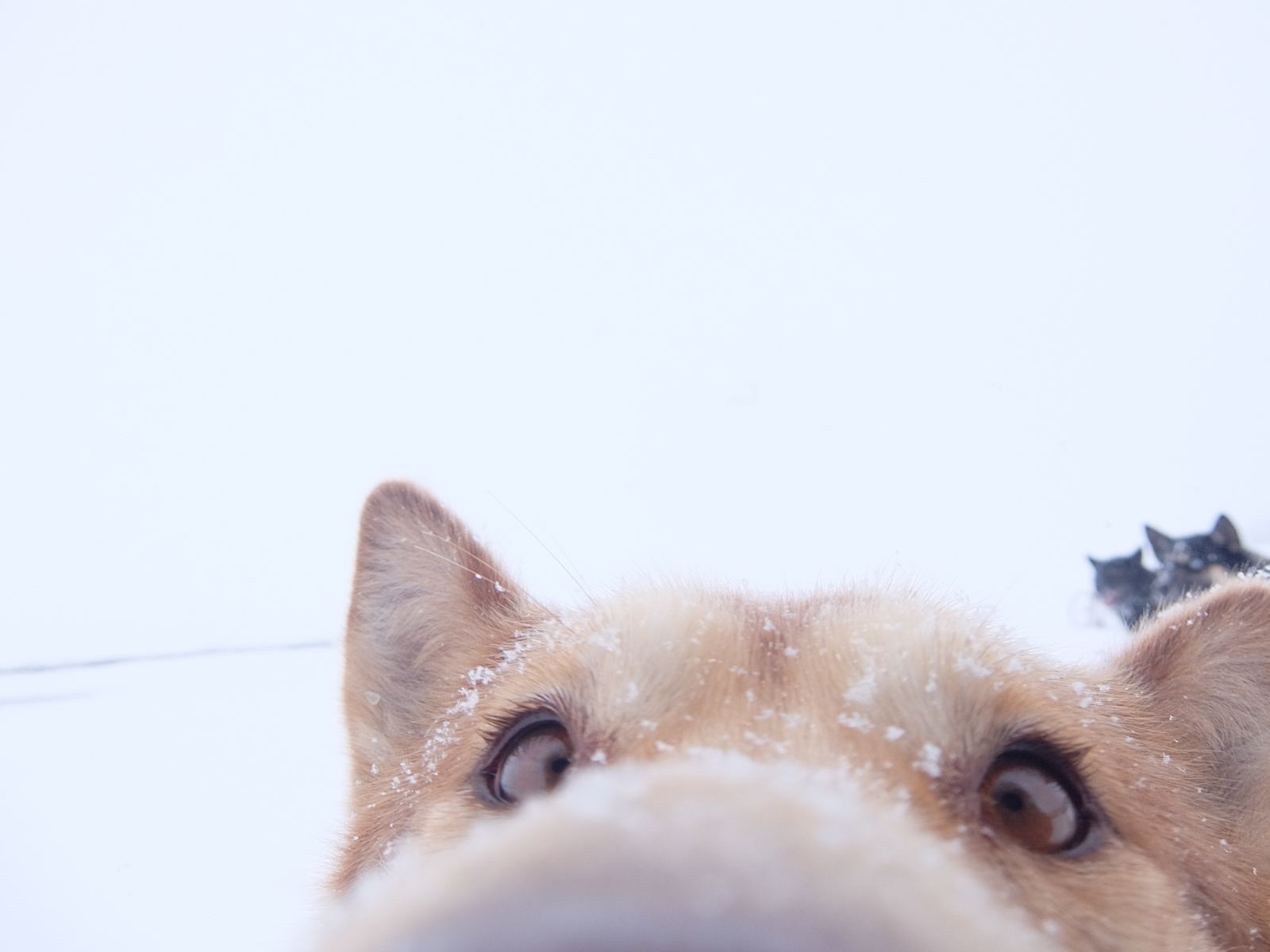
A curious nose up close: NPS Photo, Public domain
A nose built for sniffing
Smell is a dog's main way of understanding the world. VCA Animal Hospitals notes that dogs have more than 100 million sensory receptor sites in the nasal cavity, compared with about 6 million in people, and that the part of the dog brain that analyses smells is about 40 times larger than ours.
Estimates of how much better dogs smell vary a lot from source to source. VCA puts it at somewhere between 1,000 and 10,000 times better than humans, and the exact figure depends on the smell and how it is measured.
Smell also helps explain why dogs are so useful as detection partners. Their noses can pick out tiny traces of a target scent mixed in with everything else in the air, which is why trained dogs search for people, wildlife and many other targets.
Two nostrils, two samples
A 2010 study by Brent Craven and colleagues built a detailed 3D model of a dog's nasal cavity from MRI scans and simulated the airflow during sniffing. They found that each nostril collects its own separate air sample, which may help a dog compare the strength of a smell on each side and work out where it is coming from.
Dogs can also move each nostril independently, which helps them steer toward a scent a bit like a compass needle.
The secret back room
Deep in the nose, dogs have an olfactory recess, a region where scent-carrying air is guided over sensory tissue. Craven's team found that sniffing creates a special airflow pattern that sends odours to this area, very different from airflow in a human nose.
Dogs also have Jacobson's organ, or the vomeronasal organ, which opens into the roof of the mouth. It works as a second chemical sense that helps with communication between animals. And that wet nose is useful too: moisture helps trap scent particles.
Sniffing as brain food
Because smell is so central, letting your dog sniff is real enrichment, not wasted time on a walk. A slow sniffy stroll can be as tiring as a run. Scent games at home, like hiding treats around a room, tap straight into this talent.
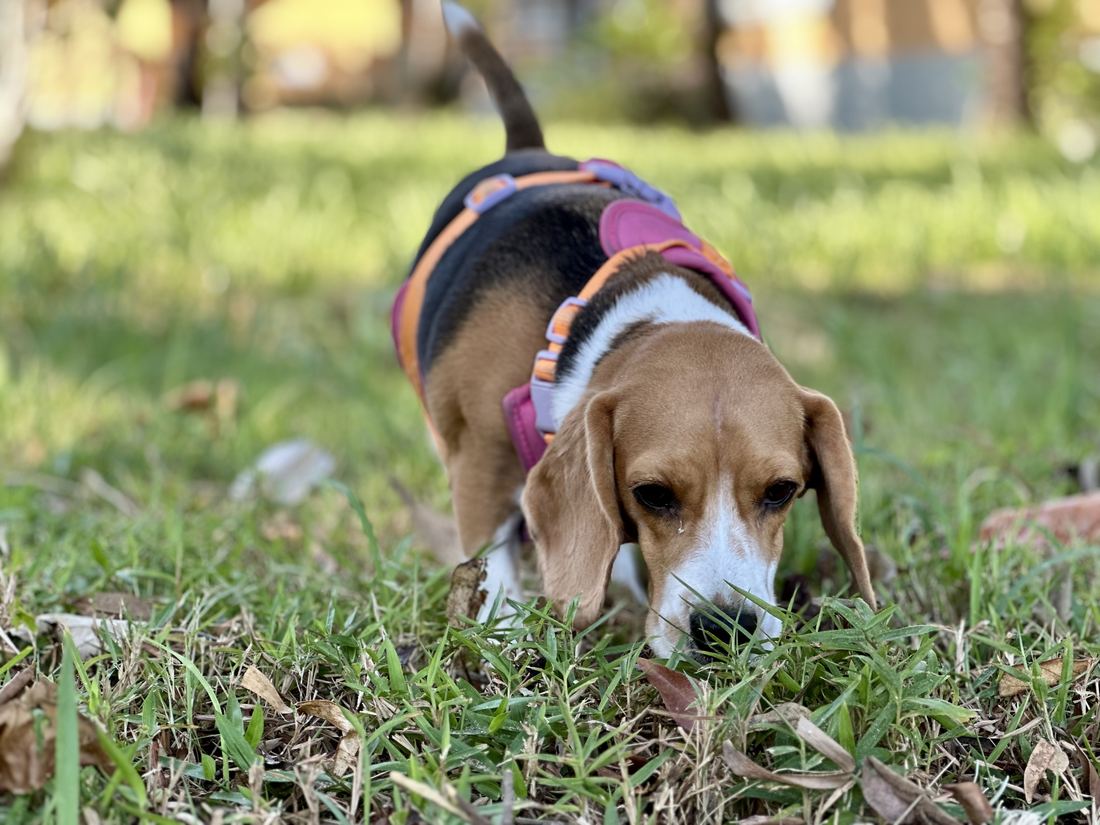
Nova's walks usually include a long investigation of every interesting patch of grass. Now we know she is reading the neighbourhood news.
- VCA Animal Hospitals: How dogs use smell to perceive the world
- Journal of the Royal Society Interface (2010): Craven et al., The fluid dynamics of canine olfaction
Facts on this page were checked against these sources.
- A curious nose up close: NPS Photo, Public domain
- Nose to the ground: Slyronit, CC BY-SA 4.0
Text written by NovaHova.